
TL;DR
On October 24, 2022, the Santa Coin team conducted an exit scam on $SANTA token and stole 765 BNB (~$209K) from $SANTA holders. The deployer has been slowly draining liquidity over a long period of time; however, our analysis explicitly focuses on the funds drained on October 24, 2022.
Introduction
Santa Coin was originally launched as a meme coin in November 2021. The Santa Coin team claimed to be expanding with the addition of experienced developers and crypto marketers that will “carry on with the vision of creating a rewarding ecosystem focused on Defi & NFT P2E gaming”.
On August 15, the Santa Coin moderator posted an announcement in the Official Santa Coin Telegram (opens in a new tab) that was later edited by the team. It is unclear what the announcement from the Santa Coin team originally said. It appears that the Santa Coin team planted the message on August 15 2022, so that the moderator could go back and make it appear to holders that this incident was a migration rather than an exit scam while taking additional funds from holders who attempted to migrate through the fake migration phishing link.

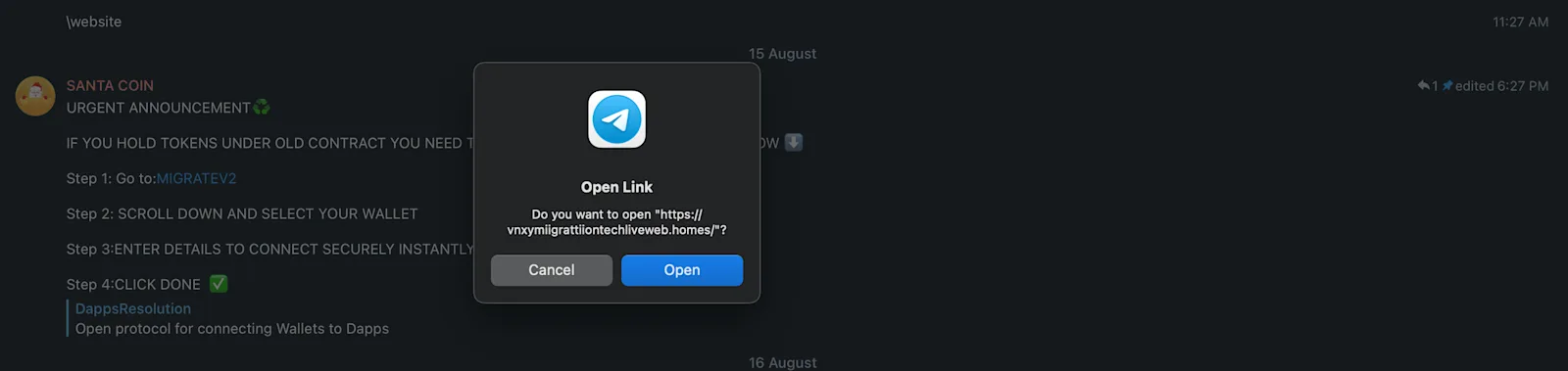
The link provided in the Santa Coin Telegram announcement led $SANTA holders to phishing website Coin Trading Solution (hxxps://vnxymiigrattiiontechliveweb.homes). According to who.is, Coin Trading Solution was registered on November 1st, eight days after the incident.
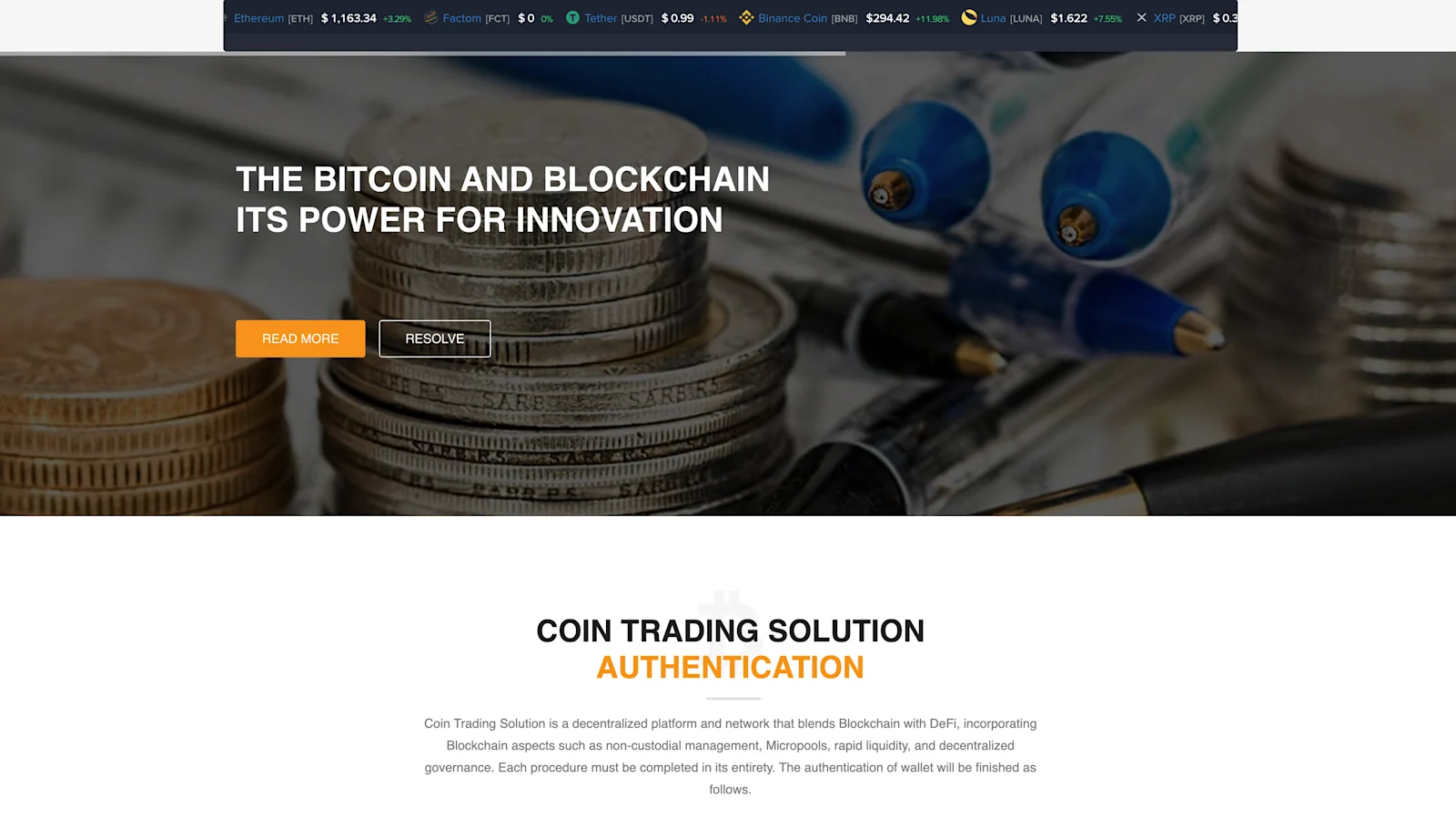
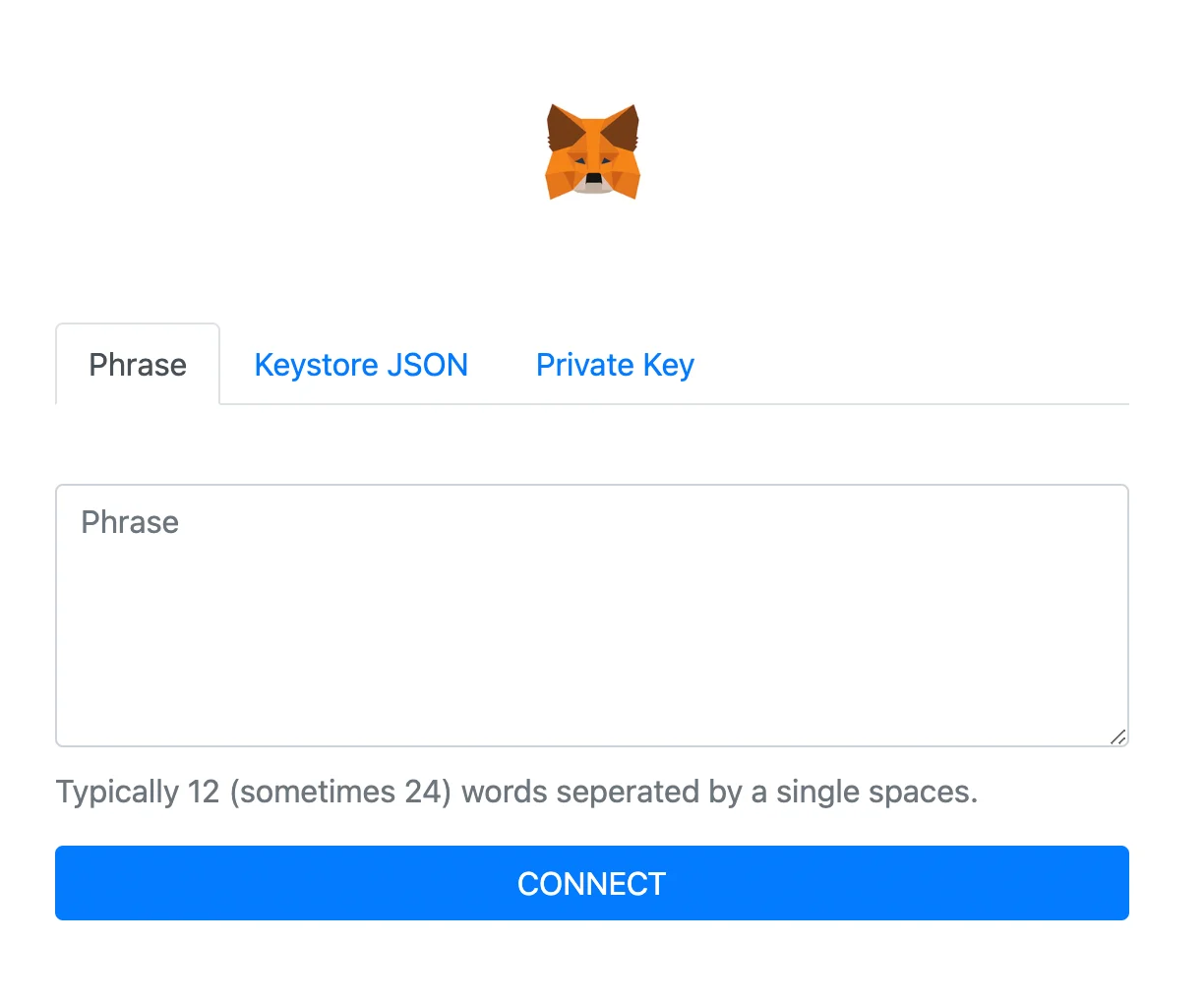
Users were then prompted to select the option to migrate (various other functions were also available); the website then asked holders to provide their private keys (pictured below).
Attack Flow
The Santa Coin deployer called the removeLiquidity() function to drain the liquidity from the Pancakeswap pool, removing approximately 600 BNB in multiple transitions.
The deployer then sent 39,535,213,129,140 $SANTA tokens to the second actor 0xc80 (opens in a new tab)... in the following transaction: 0x35b97e72048419c7fc056e255af27aa36523031e1b7be7000e644a5d6845f2f6 (opens in a new tab)
Finally, the second rugpuller then sold these tokens for 165 BNB.
Addresses
Santa Coin: https://bscscan.com/token/0x4f1a6fc6a7b65dc7ebc4eb692dc3641be997c2f2 (opens in a new tab)
Deployer (first rugpuller): https://bscscan.com/address/0x1a97098b09b8be6b457fab6f14f9cbe42c19a2f5 (opens in a new tab)
Second rugpuller: https://bscscan.com/address/0xc80d7eb1526364e6734c9a35ea56471ea91fae60 (opens in a new tab)
Pancakeswap pool: https://bscscan.com/address/0xfdf3b6a027839a30a5de3e355708fd45c323f7ec (opens in a new tab)
Exploit Transactions
In this exit scam, there are many token sales and remove liquidity transactions:
Deployer (first rugpuller): https://bscscan.com/tx/0xdd3bb66b981cd13d0f8c4bbc5caf0c26d402b823c6998595c1292e6958a9e280 (opens in a new tab) https://bscscan.com/tx/0x28e4d7b7ab53b993f139c7aa24c93bd050e09ba6235163b1425757a889746161 (opens in a new tab)
Second rugpuller: https://bscscan.com/tx/0xe5bfde849d9e2a3945fc49df795c197c76377598714ba5e1f36a72641d45715c (opens in a new tab)
See DeBank | Your DeFi wallet (opens in a new tab) for a complete list
Profits and Asset Tracing
Total funds lost from holders in this exit scam was around 765 BNB (~$209K). The 595 BNB has been transferred from the deployer wallet (first rugpuller) to 0xc94 (opens in a new tab). Funds were then transferred to wallet 0xc40 (opens in a new tab). The other 165 BNB from the second rugpuller has been sent to account 0xc40. Since the incident, 0xc40 distributed the tokens to Pancakeswap, BUSD-T Stable coin, and 0xb2E (opens in a new tab).
Conclusion
It is almost certain that this token was designed to be an exit scam from the beginning. The issue lies in intentional poor contract design and the initial token distribution created by the actors. Since the incident, Santa Coin’s Twitter is still up (opens in a new tab) and has been stripped of previous promotional tweets of Santa Coin. Is this in preparation for a promotion of a new coin this year?
Protect yourself and your assets by following @CertiKAlert (opens in a new tab) on Twitter to stay up to date on all the latest Web3 security news, and visiting certik.com as part of your due diligence.
Do your own research and beware of scam tokens this holiday season!