
Incident Summary
On July 23, 2026, an attacker exploited the Verus (opens in a new tab) Protocol’s Ethereum cross-chain bridge, draining approximately $7.44 million in ETH, tBTC, stablecoins, and MKR. The attack relied on a discrepancy in how Verus and Ethereum interpreted notarization data: malicious duplicate state-root entries were included in otherwise legitimate notarizations, signed by Verus notaries, and then relayed to Ethereum, where they overwrote the genuine trusted state root. Using this attacker-controlled root, the attacker submitted a fabricated bridge import proof that authorized inflated withdrawals despite initiating only a 0.01 VRSC export.
Background
A Verus “notarization” is a signed, on-chain cross-chain checkpoint. It establishes the root against which later transaction/export proofs will be verified. It contains:
- which system/currency it represents
- the notarization height
- one or more proofRoots:system ID
- chain height
- state/proof root
- block hash
- accumulated power
- currency and converter state
- a pointer to the preceding notarization
- a hash linking to the previous cross-chain notarization
- proposer and node information
The proof roots are derived from public Verus/Ethereum chain data https://github.com/VerusCoin/VerusCoin/blob/a10e2fb39e42a7c31d4e447c9e152090a562a57f/src/pbaas/notarization.cpp (opens in a new tab). Anyone may submit or relay a candidate notarization, but nodes accept it only if it spends the correct notarization-thread UTXO and supplies the required consensus evidence. https://github.com/VerusCoin/VerusCoin/blob/a10e2fb39e42a7c31d4e447c9e152090a562a57f/src/pbaas/notarization.cpp (opens in a new tab) The CNotarySignature was public evidence inside CNotaryEvidence, published through EVAL_NOTARY_EVIDENCE; the attacker could harvest and relay it.
Key Transactions (Times in UTC)
Key Addresses
| Address | Label |
|---|---|
| RXo2PqXjgRVJ8w8QVDErVqVLavz4TToyuu | Attacker on Verus |
| 0xBda71b58cEc0b1C20A8f87cCD52FA0679747855c | Attacker address on ETH |
| 0xCFd0A20703cD11E0b9f665e1C3F1Ef989C142D54 | Attacker profit address on ETH |
| i3f7tSctFkiPpiedY8QR5Tep9p4qDVebDx | Bridge.vETH on Verus |
| 0x71518580f36FeCEFfE0721F06bA4703218cD7F63 | Verus: Ethereum Bridge |
| 0x54e03a1682fd0bb065b669f6296f97028dcfd4ce | VerusProof contract |
Attack Flow
1. Notarization poisoning on Verus:
Transaction 1 (opens in a new tab) spent the previous accepted-notarization output 4f4f…:1 and created 0c247…:0.
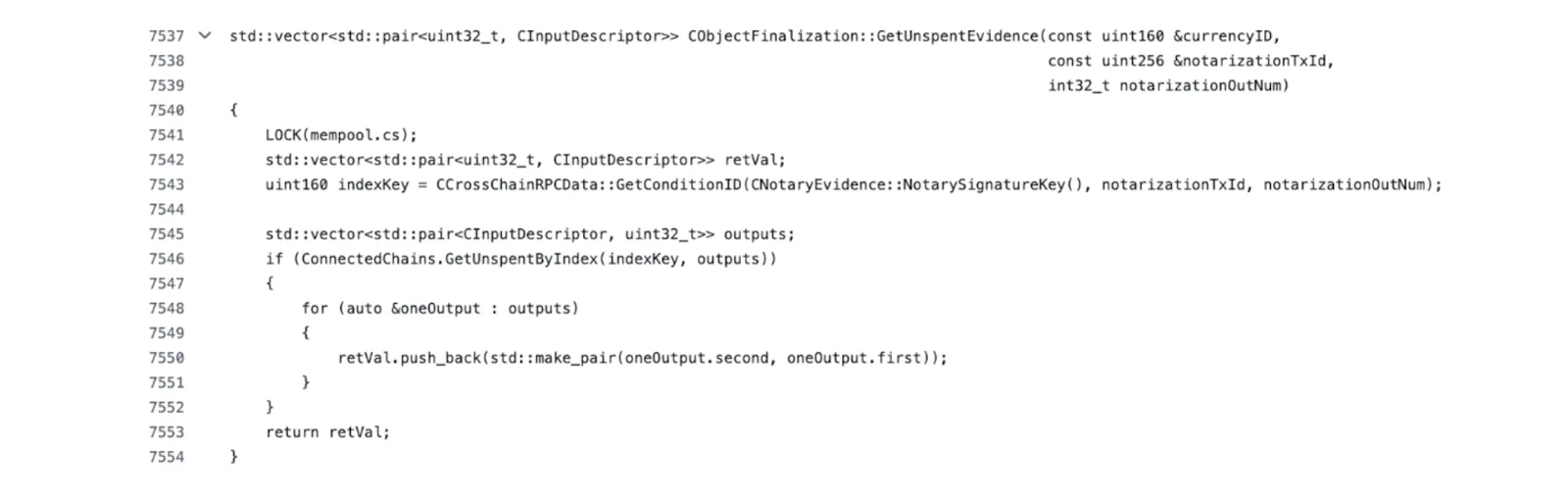
Referencing notarization.cpp (opens in a new tab), the notarization reads:
Referencing notarization.cpp (opens in a new tab), the notarization reads:
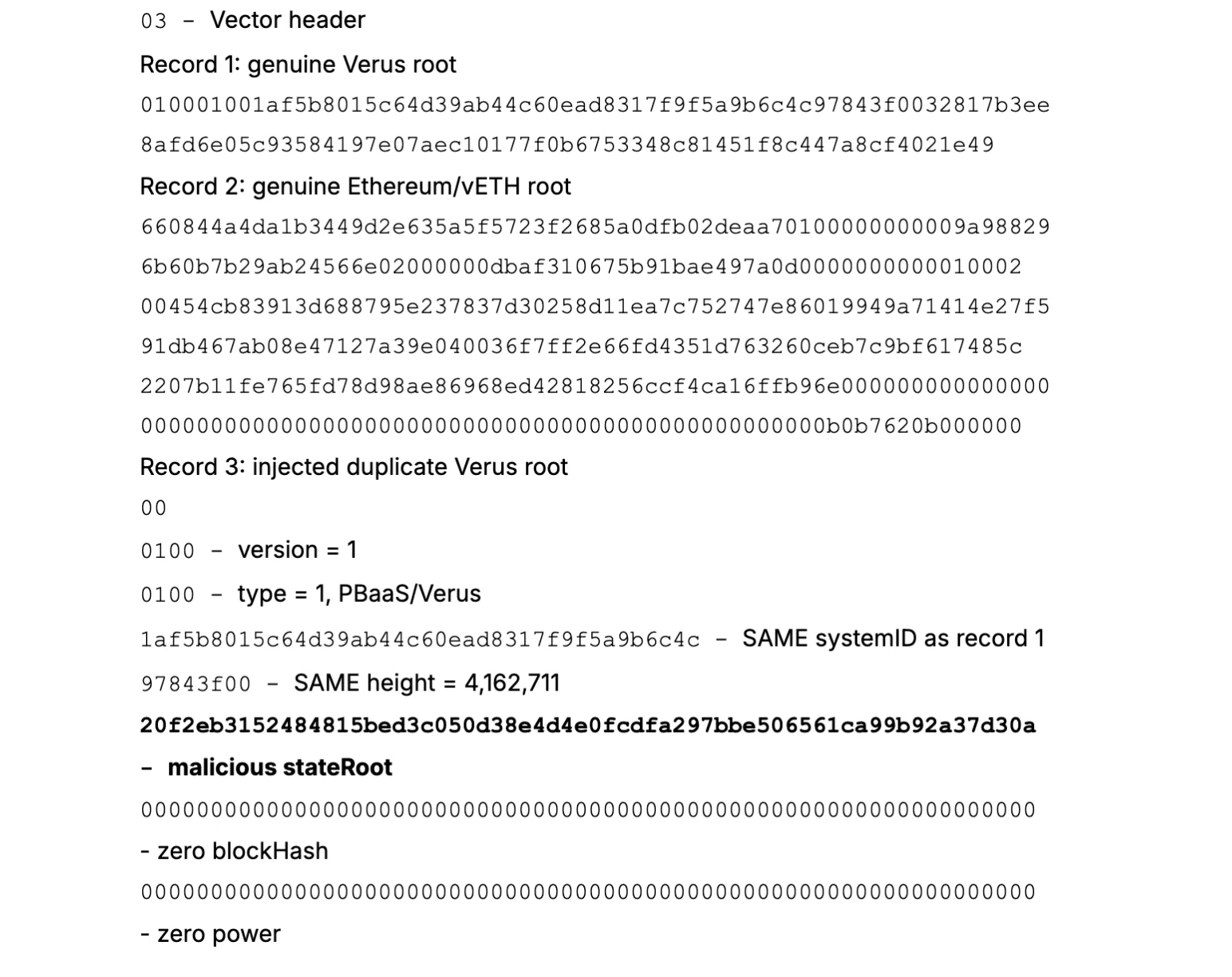
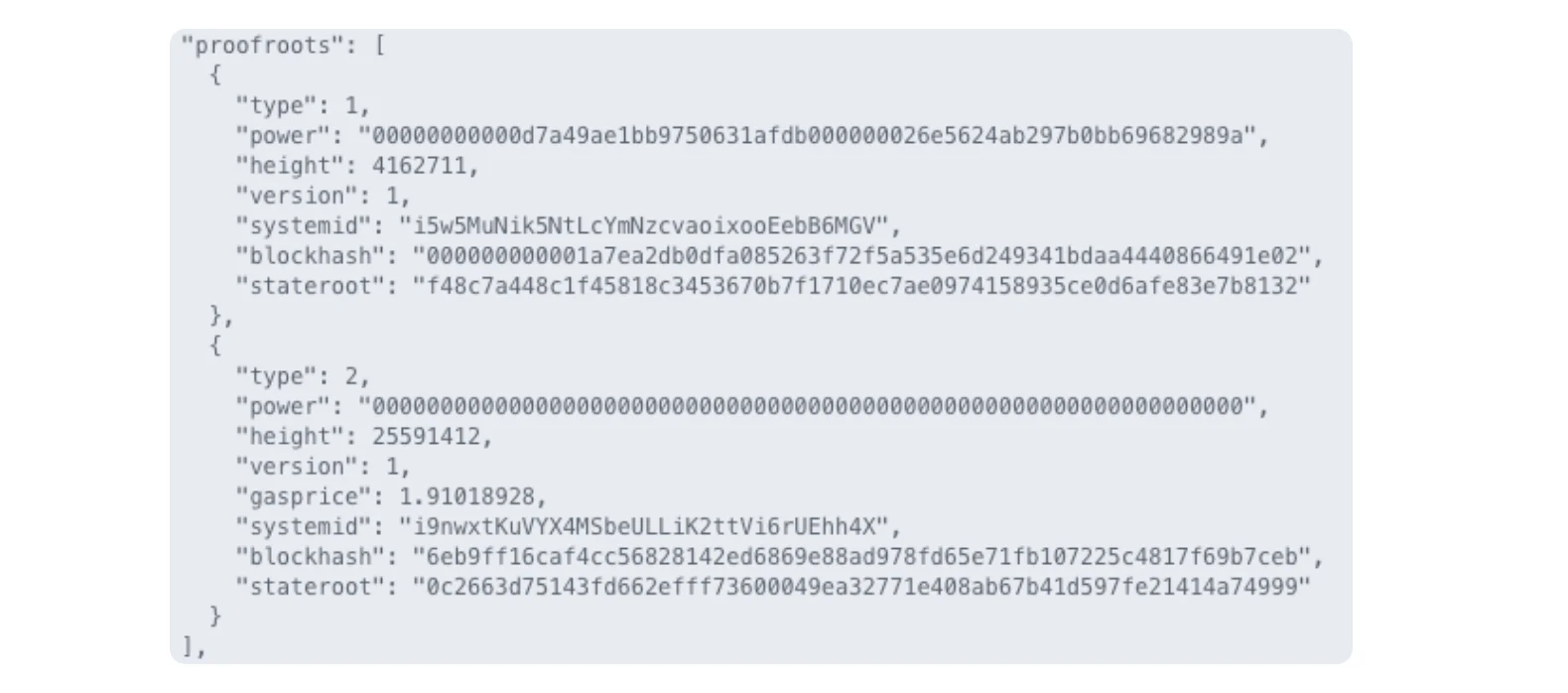
two successive transactions expends previous notarization output, and secretly submitting 2 and 3 more malicious state-root entries respectively of

2. State root injection on Ethereum:
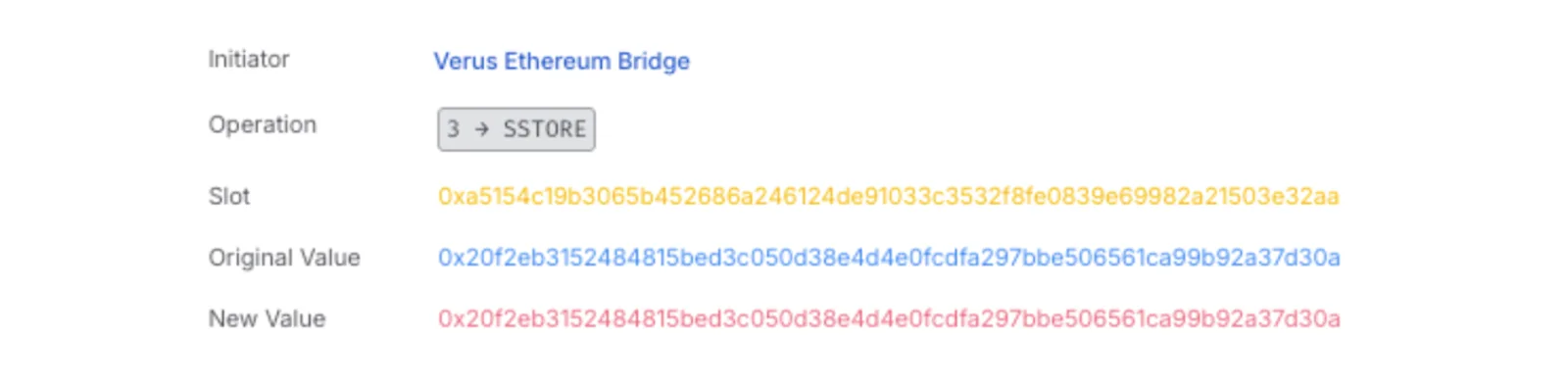
The attacker waited for the notary software to validate the innocent first roots then 11 legitimate notary daemons sign the raw Verus notarization, including the ignored duplicates containing malicious state root.
New signatures are wrapped in a CNotarySignature, placed inside CNotaryEvidence, and serialized into an EVAL_NOTARY_EVIDENCE CryptoCondition output
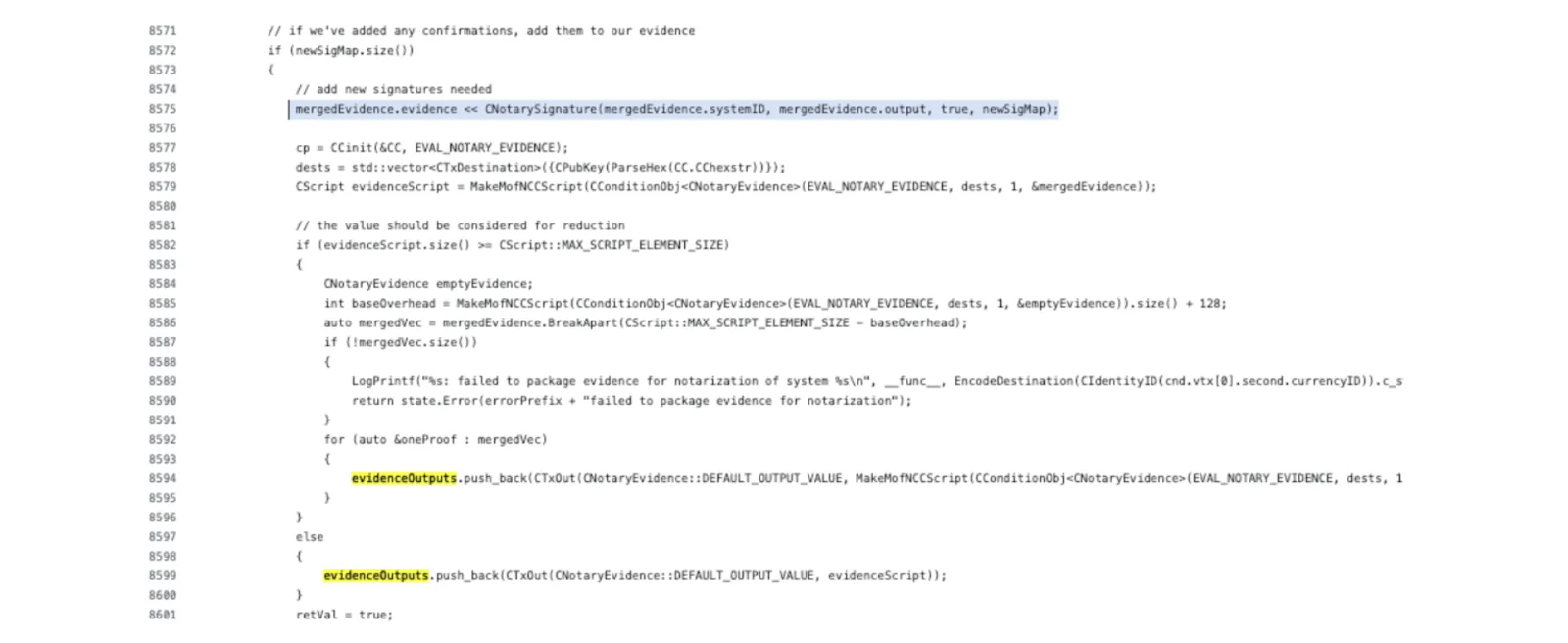
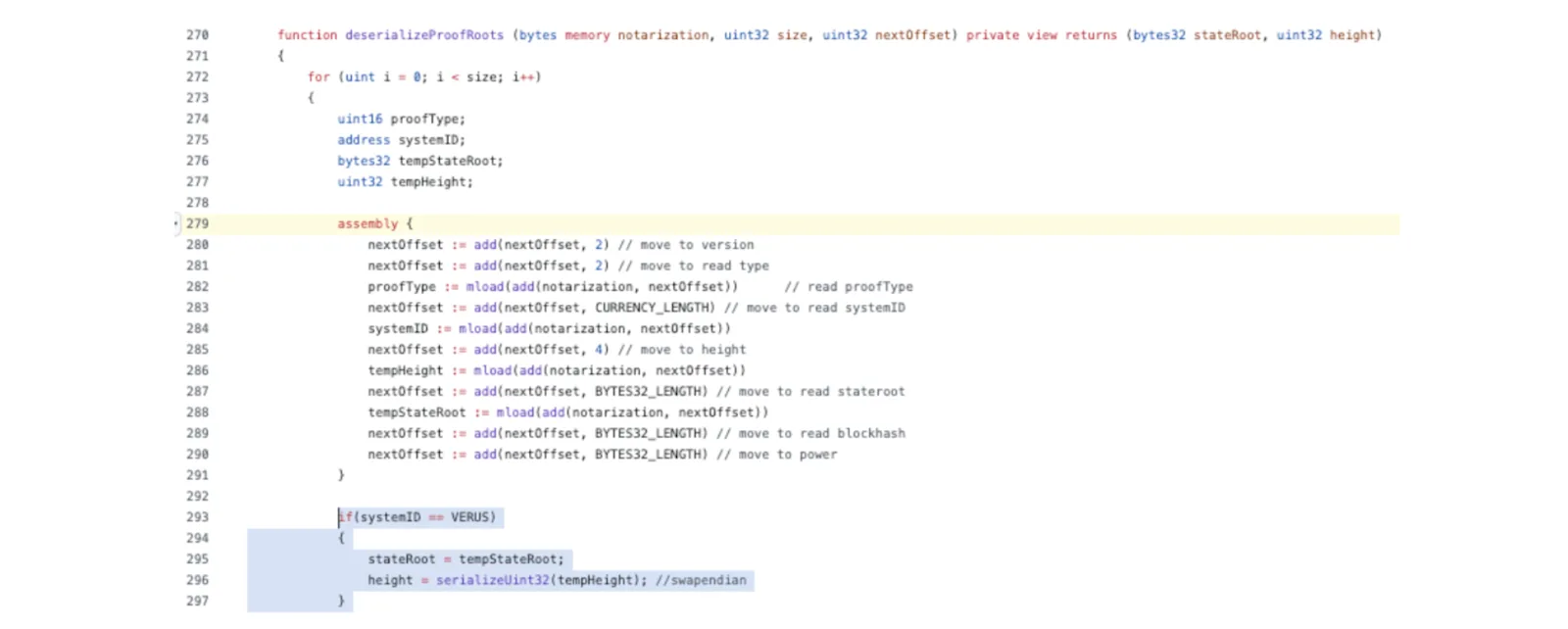
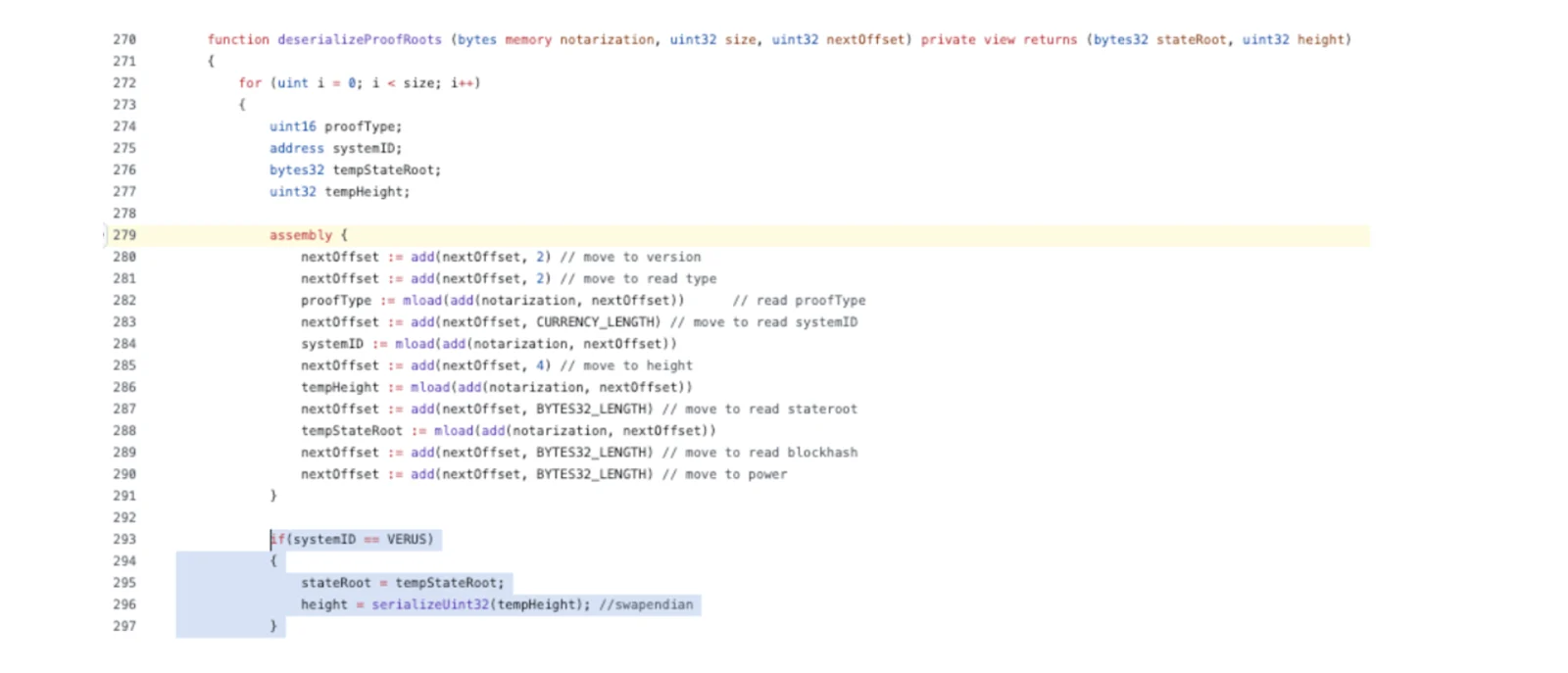
Upon deserializeNotarization()

3. Set up bridge export on Verus:
In transaction 5b5043febfd7f7c089e976d11d0f87a904881266bb96dd118b3d69b0e02aab52 (opens in a new tab) a fresh address initiated a 0.01 VRSC cross-chain request, with a ~12 fee supplied through Bridge.vETH.
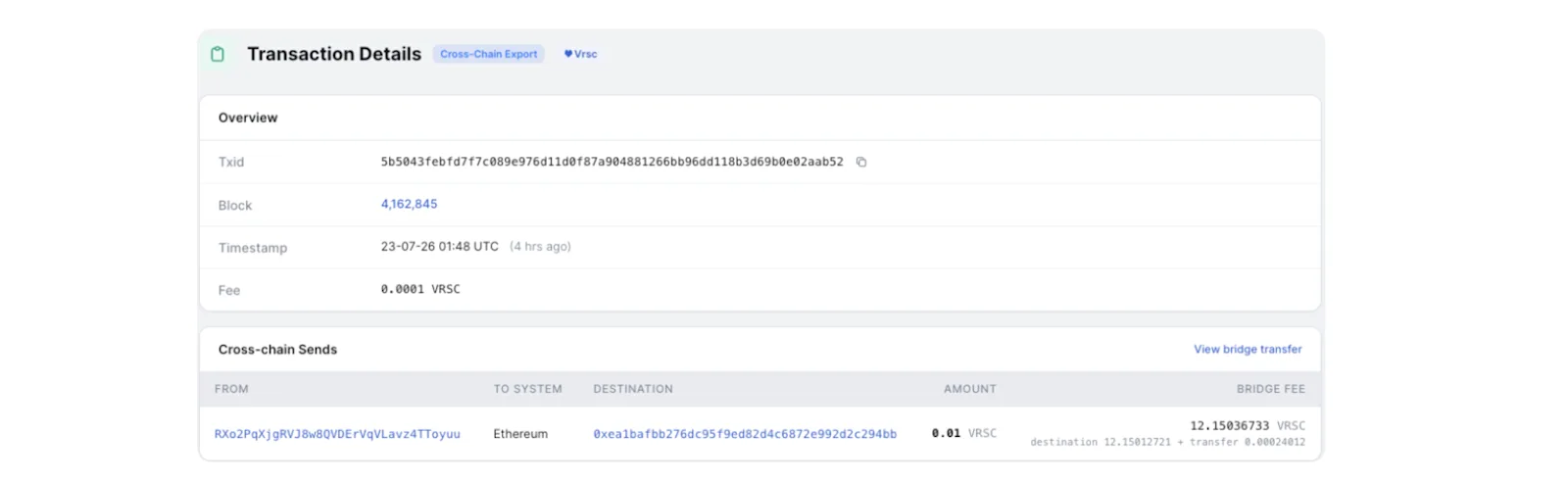
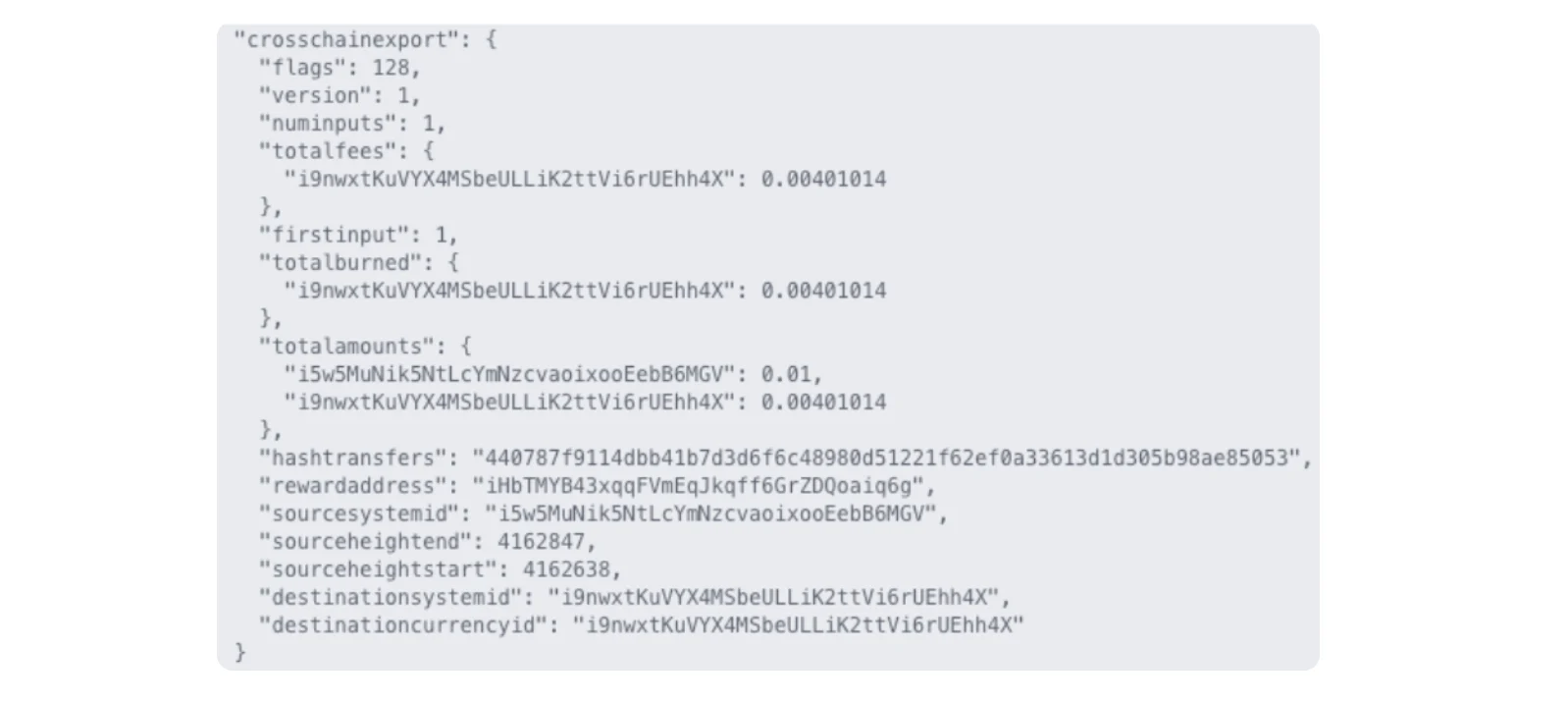
hashtransfers: 440787f9114dbb41b7d3d6f6c48980d51221f62ef0a33613d1d305b98ae85053 "sourceheightend": 4162847” "sourceheightstart": 4162638
4. Call submitImports() to drain bridge on Ethereum:
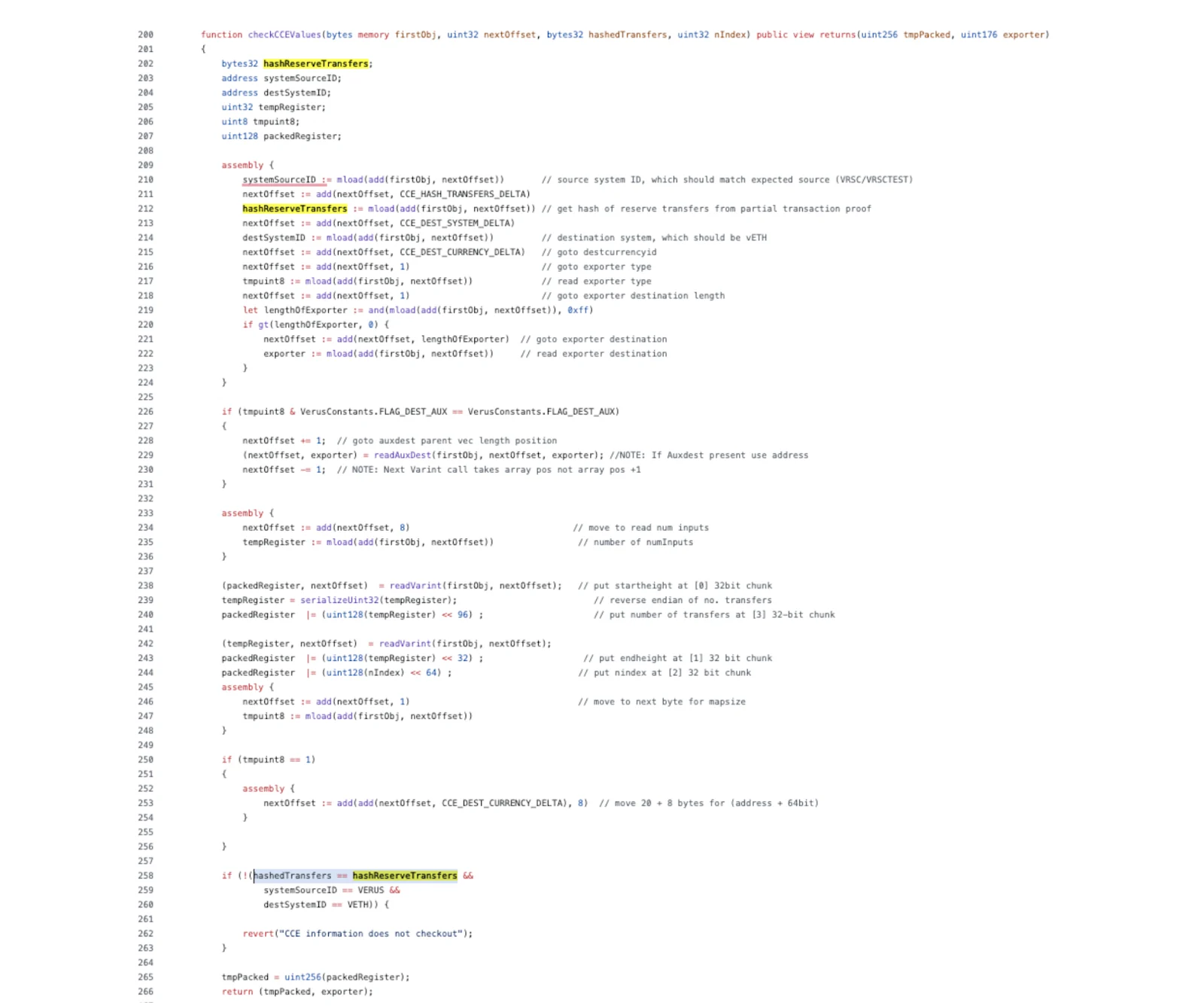
Of the 14 CCE fields, the notable changes are hashtransfers, which are fabricated to match the draining transfers hash. ‘numInputs is changed to 8, firstinput is change to 0
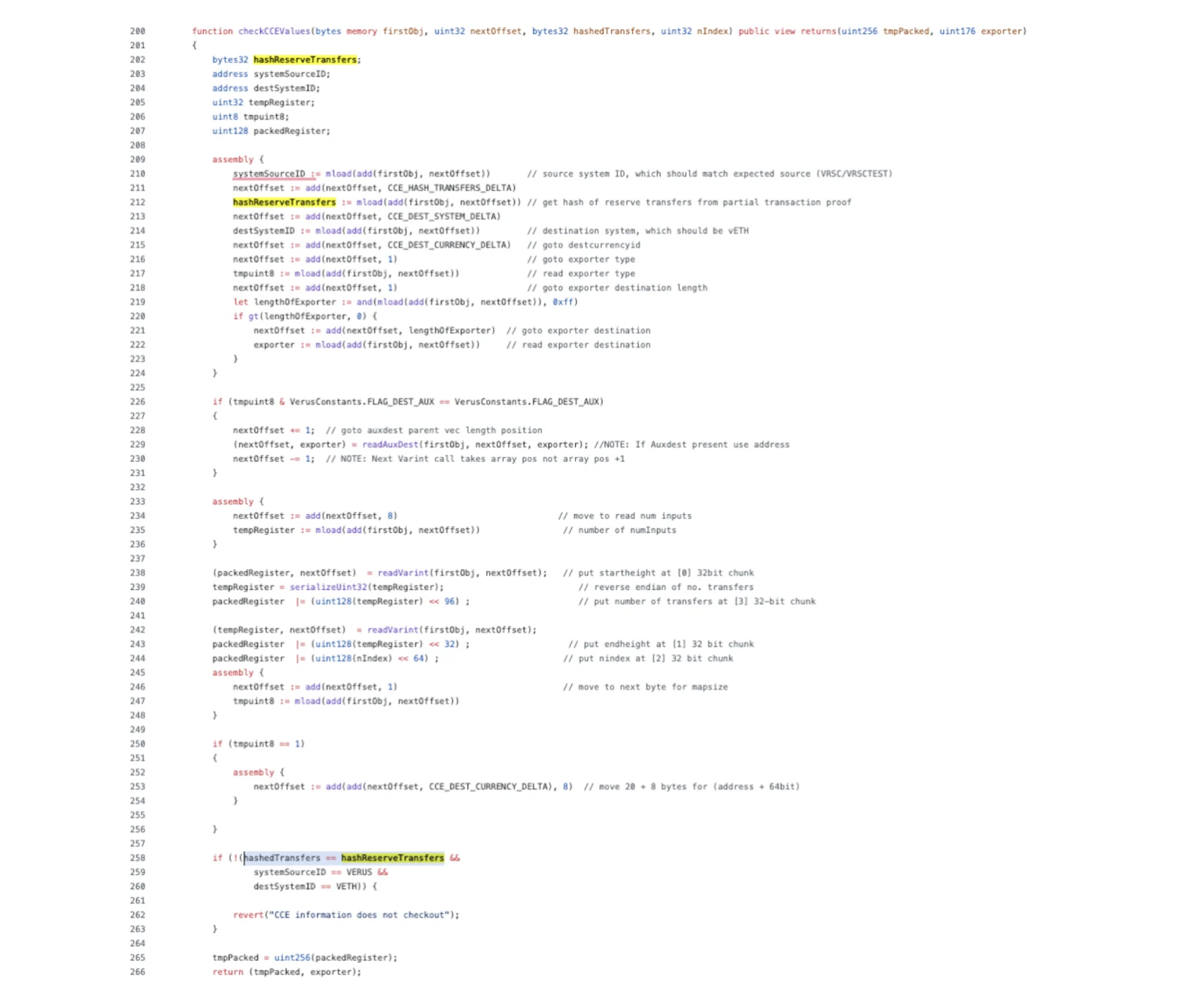
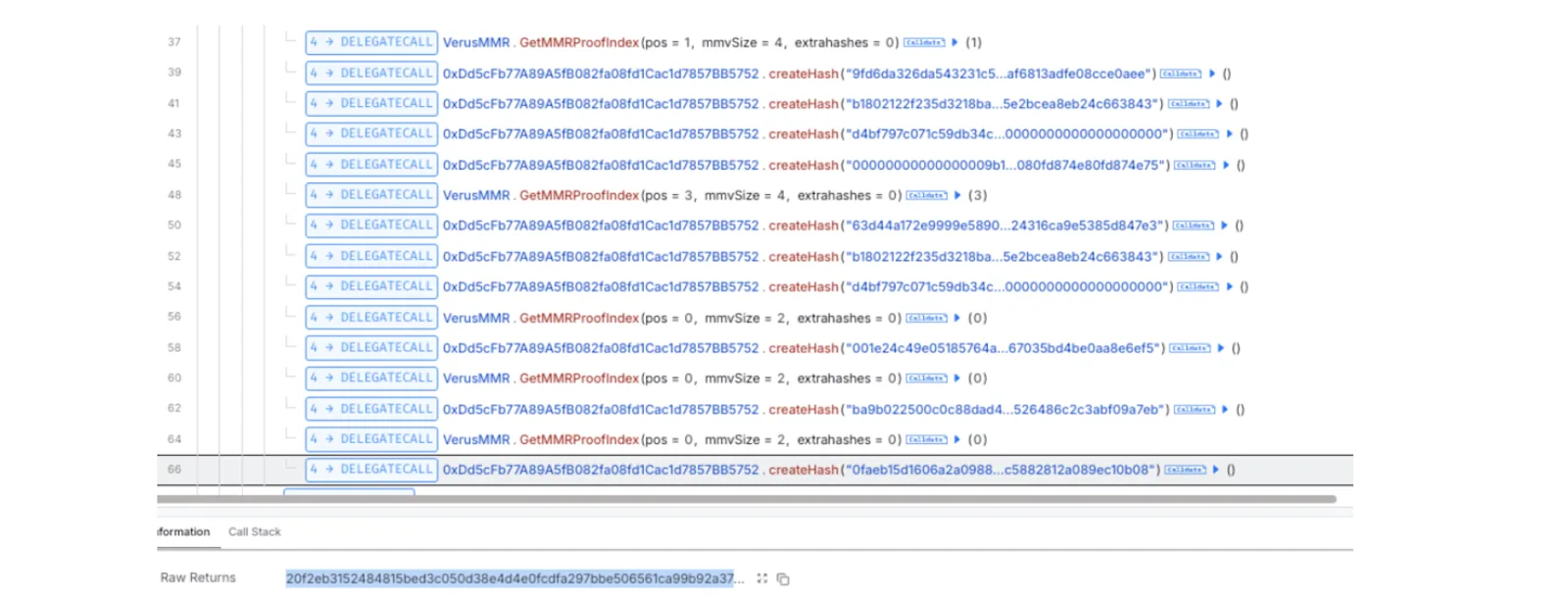
Of the proof components, the reused parts were:
- Txid: 7bdd56c52376ae63aa2007e1d8e1694d8413bdc95709dfe442f77285765f5938
- First node: 75f5a00b1f2d9b0d898a4d81b00d417d0123684e05bb4af6813adfe08cce0aee
and public format/constants (proof version, types and system identifiers)
Vulnerability
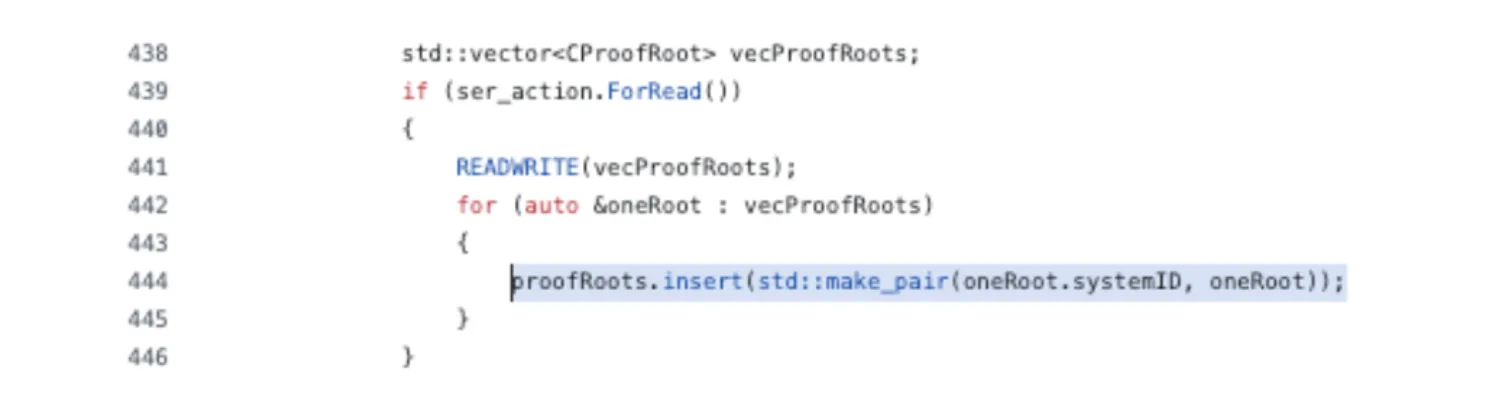
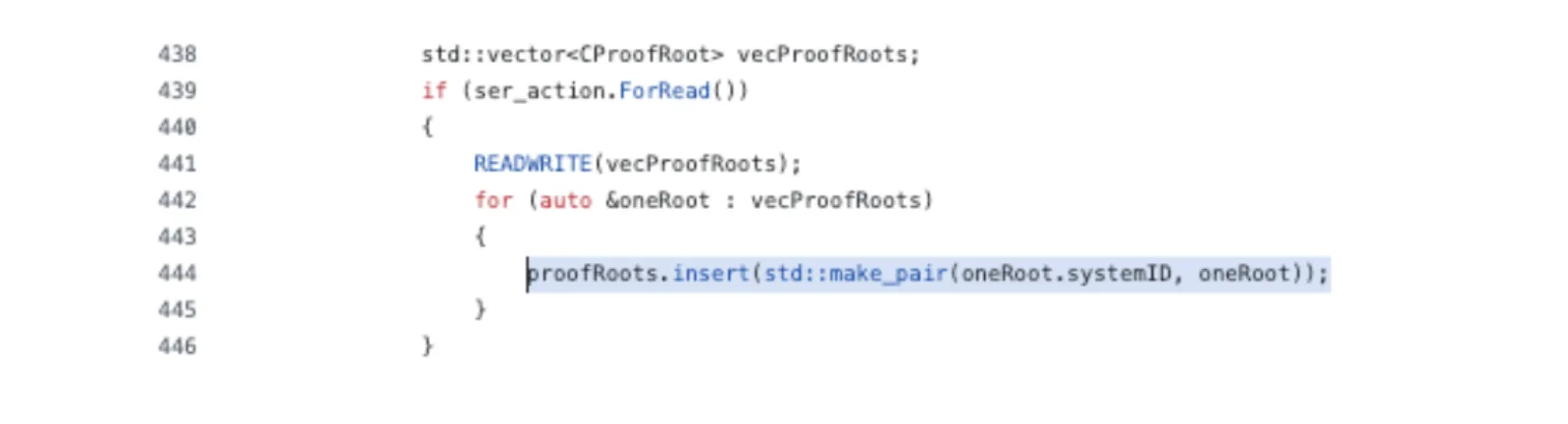
The primary failure is due to cross-chain semantic consistency, the attacker caused Verus notaries to authorize bytes that Verus understood as containing the genuine checkpoint.
Verus reads the serialized roots into a vector then inserts them into a map while Ethereum interpreted the same bytes as containing an attacker-controlled checkpoint.
Fund Flow
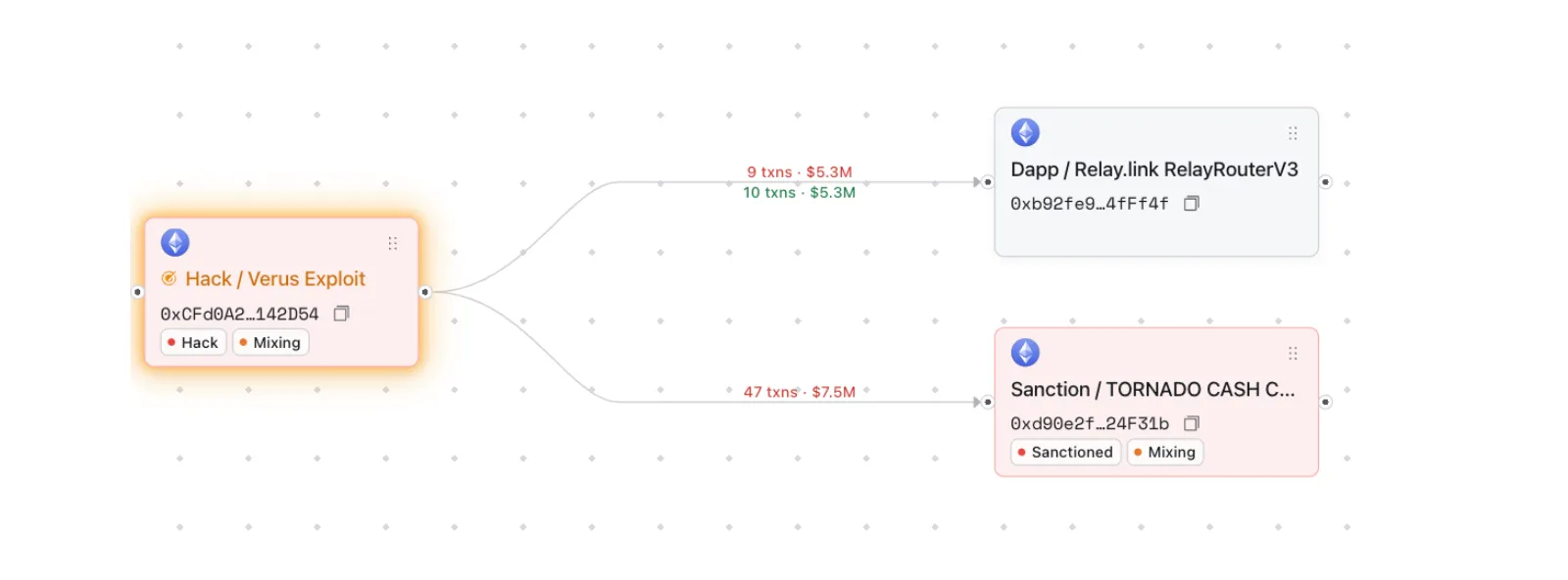
Following the exploit, the attacker swapped (opens in a new tab) the stolen assets for 2,778.8662 ETH via Relay then deposited the funds into Tornado Cash.
To keep up to date on the latest incident alerts and statistics, follow @certikalert (opens in a new tab) on X, or read our latest analysis on certik.com.