Products & Technology
Featured Ecosystems


Company
The Importance of KYC Verification: A Key to Secure Financial Transactions


The Know Your Customer (KYC) verification process for project leaders and developers has become a fundamental pillar of the Web3 ecosystem, transforming how decentralized platforms manage regulatory compliance while preserving user trust. Contrary to common misconceptions, implementing KYC in the Web3 environment doesn't necessarily mean compromising decentralization principles; rather, it enables a balance between blockchain innovation and regulatory requirements.
Professional KYC services protect team privacy while ensuring transparency, allowing developers to establish credibility without risking personal safety through doxxing. This approach has proven successful, with verified projects experiencing significant growth in community engagement and exchange listings.
KYC Regulatory Requirements Around the World
KYC regulatory requirements differ across jurisdictions and geographic regions. In the European Union (EU), AML Directives such as the Fifth / Sixth AMLD and related “AML Regulation” state that companies must maintain and disclose information about beneficial owners, which includes those with more than 25% ownership or voting rights, those who control by other means, and certain senior managing officials.
Since December 2024, the MiCA regulation requires all crypto asset service providers (CASPs) in the EU to obtain a MiCA license. This regulation establishes strict requirements concerning:
- Mandatory KYC Processes: Verification of detailed personal information, including identifiers and addresses, with verification of biometric credentials like fingerprints and facial recognition.
- Risk-Based AML Programs: Implementation of surveillance, monitoring, and reporting programs to detect suspicious activities.
- Travel Rule: Exchange of sender and beneficiary information for transfers exceeding certain thresholds (typically $1,000-3,000).
In the United States, the Securities and Exchange Commission develops and enforces disclosure requirements. If tokens or crypto assets are being offered as securities, their issuers must disclose their identities, experience, and the role of executive officers and other “significant employees” performing policy-making functions. Offerings must include material information about the issuer, such as risks, management, control, and supply.
How Does CertiK’s KYC Badge Work?
The CertiK KYC Badge exemplifies this approach by providing a verified status that helps differentiate projects from hundreds of unverified ones, facilitates listing on centralized exchanges, and builds trust with retail users. Investigators use specialized databases and analysis tools, coupled with quantitative and qualitative signals, to assess fraud risk objectively.

The process includes video calls with project managers, detailed questionnaires for key team members, and in-depth background verifications that analyze geographical distribution, professional histories, and potential connections to previous fraudulent activities.
Please note: a KYC verification is not a guarantee of security. In the event that a project performs fraudulent activities, we may be required to cooperate with local law enforcement to identify the responsible party involved. Always do your own research and proceed with caution when assessing a project.
What Documents are Required for CertiK’s KYC Badge?
Certain documents are necessary to perform KYC on an individual or the members of a Web3 project and to verify their legitimacy:
- Video Call: Once a project team applies for the badge, we arrange a video call with the project owner or manager. Nothing needs to be prepared in advance of the call, as the objective is to learn more about the project's background and the team.
- ID Check: After the video call, key team members fill out a questionnaire and submit their IDs. This helps our intel analysts conduct verifications and background checks. Personal information is kept strictly confidential by CertiK and will never be shared publicly.
- ID Verification: Projects are required to provide us with passport verification. This includes an ID authenticity inspection using AI-based detection systems, as well as liveness checks to ensure the individual is indeed real and matches the ID. Computer-generated or modified identities pose a significant risk in the KYC process, and CertiK employs leading technologies to prevent any loopholes.
- KYC Data Collection: Each project team member is required to provide additional verifiable data to help our investigators conduct thorough due diligence on their backgrounds, confirming their inclusion in the project team. This data is securely collected, assessed, and stored by CertiK security researchers.
How Long Does KYC Verification Take?
Once the project’s primary manager has been interviewed and the core team members have submitted their IDs, the verification process usually takes a week, depending on the size and complexity of the project team. Once a KYC badge is approved, the team is informed and the badge is displayed on the project's Security Leaderboard profile.
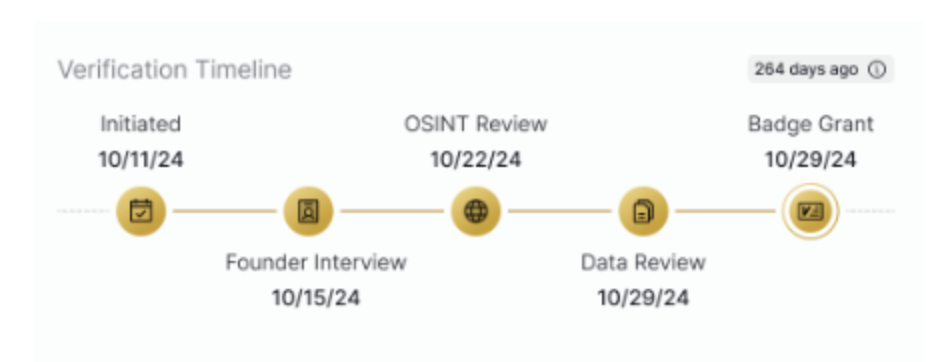
Our KYC verification is done by ex-law enforcement and intelligence professionals. It’s a rigorous and comprehensive process that goes deep into the background of each core team member. We provide this service to raise the standard of transparency and security in the on-chain world. Part of this involves keeping private details private. Once we verify a team’s details, we keep them secure with our SOC II-compliant methods. We’re the first Web3 auditing firm to earn this certification.
Benefits of CertiK’s KYC Badge
- Added Security: The CertiK KYC Badge adds an additional security layer to project owners. A comprehensive, in-depth verification of the team ensures more accountability and reduces and mitigates the risk of fraud. Our process also allows early detection of malicious actors.
- Privacy Protection: Since malicious actors can target project teams, CertiK ensures complete privacy and respects the anonymity of developers. We publish a KYC Badge to show that we know the team behind the project, but we don’t publish any personal information identifying the team.
- Trust and Legitimacy: The reliability and integrity of the core team are of vital concern for communities, investors, launchpad/platforms, partners, and influencers who want to reduce operational, reputational, and legal risks.
How AI is Transforming KYC Verification for Crypto Project Teams
Artificial intelligence (AI) has become a crucial component in modern KYC processes, revolutionizing identity verification by introducing unprecedented levels of precision and speed. This technological advancement is significant for crypto project teams operating in an often-anonymous environment where practical KYC tools are essential to validate integrity and legitimacy.
Advanced Identity Verification and Document Analysis
AI systems can rapidly analyze biometric data, facial recognition, and document authenticity, checking against various databases and watchlists with high levels of accuracy.
The role of AI extends well beyond simple identity checks, supporting investigators as they dive into detailed background analyses and examine digital footprints, professional histories, and public records. This thorough vetting process mirrors the rigorous standards observed in top-tier KYC practices, with AI's capability to sift through vast amounts of data, ensuring that only individuals with verifiable and reputable backgrounds lead crypto projects.
Pattern Recognition and Risk Detection
AI excels at detecting patterns and anomalies in online behaviors, translating into the identification of behavioral red flags and potential risk indicators in the context of KYC for crypto project teams. This proactive stance is key in safeguarding the community from deceptive practices and ensuring a healthy ecosystem.
Scalability and Efficiency
The exponential growth of the crypto sector necessitates KYC processes that are both efficient and scalable. AI meets this need by processing large volumes of verifications without compromising accuracy or speed. This ensures comprehensive vetting as more projects enter the market while upholding high standards of due diligence.
This scalability is significant for our platforms, which verify hundreds of crypto development teams through rigorous vetting processes.
Regulatory Compliance and Adaptability
AI adds crucial layers to the already-complex regulatory environment of cryptocurrencies. The ability to use new tools to adapt to emerging regulations helps ensure that crypto project teams remain compliant with international laws. This dynamic compliance aligns with global best practices in KYC and is vital for the legitimacy and sustainability of crypto projects.
How KYC Helps Reduce Fraud in Web3 Ecosystems
KYC plays a determining role in preventing fraudulent activities within Web3 ecosystems by establishing multiple layers of protection and verification.
Preventing Sybil Attacks and Multiple Accounts
One of the main threats in Web3 concerns Sybil attacks, where a malicious user creates multiple accounts to manipulate decentralized systems. Proof of Humanity (PoH) emerges as a crucial solution, requiring users to submit verifiable proofs like video recordings and personal documents to prove their humanity.
Professional KYC services implement comprehensive background investigations that go far beyond simple ID checks. Experienced investigators with law enforcement and military backgrounds conduct thorough assessments designed to detect and prevent fraudulent team formations.
Early Detection of Malicious Actors
The CertiK KYC process demonstrates how comprehensive verification can detect malicious actors early in the development cycle. Their investigators use specialized databases and analysis tools coupled with quantitative and qualitative signals to assess fraud risk objectively.
The process includes video calls with project managers, detailed questionnaires for key team members, and in-depth background verifications that analyze geographical distribution, professional histories, and potential connections to previous fraudulent activities.
Mitigation of Financial Risks and Money Laundering
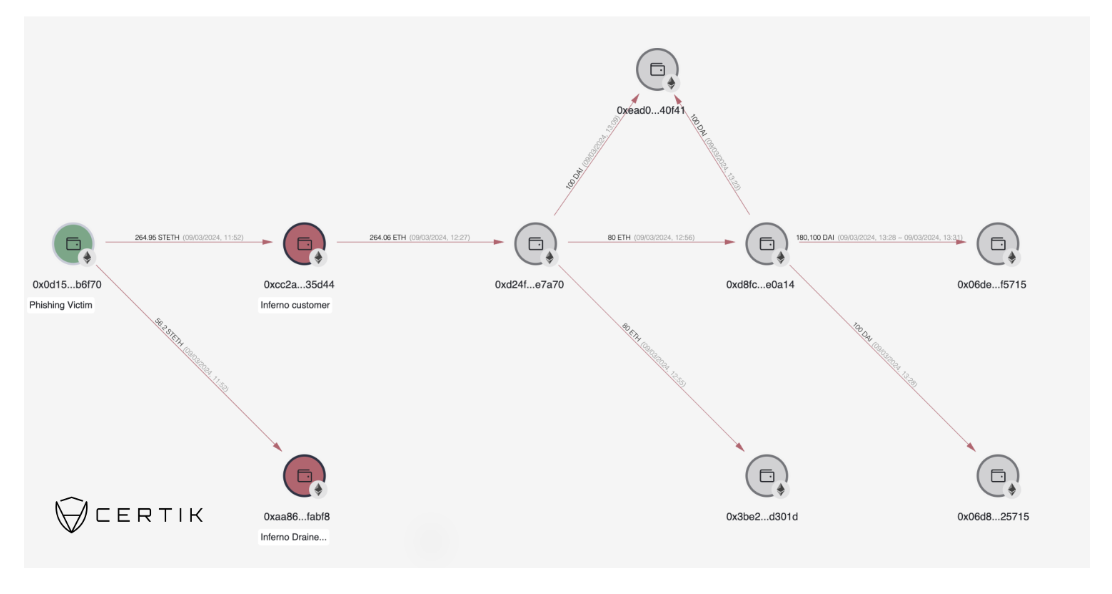
Since crypto transactions are fast, global, and often irreversible, they constitute a prime target for money laundering and financial fraud. Digital identity verification helps businesses comply with KYC and AML (Anti-Money Laundering) regulations, reducing the risk of illicit activities.
Advanced blockchain monitoring systems now enable:
- tracing suspicious fund flows;
- identifying interactions with sanctioned addresses;
- detecting abnormal behavior patterns;
- and automatically reporting suspicious transactions to authorities.
The Future of KYC in Web3
The evolution of KYC in Web3 represents much more than a simple adaptation of traditional regulations to the blockchain environment. It embodies a fundamental transformation of how we conceive digital identity, trust, and compliance in a decentralized world. The integration of AI and professional investigative techniques has elevated KYC from basic document verification to comprehensive risk assessment and fraud prevention systems.
For Web3 businesses and developers, adopting strong KYC protocols is not just a regulatory necessity but a strategic investment in building sustainable, secure, and trustworthy ecosystems. As demonstrated by successful implementations like CertiK's KYC Badge system, comprehensive verification processes can provide competitive advantages, enhance community trust, and facilitate business growth while maintaining the privacy and security principles fundamental to Web3 innovation.
Project teams who want to apply for the CertiK KYC Badge can contact us through the KYC Verification page. CertiK is the leader and most trusted platform for Web3 security, and its KYC badge has the most reliable verification process.