Products & Technology
Featured Ecosystems


Company
Top Crypto Security Vectors to Look Out For in 2026


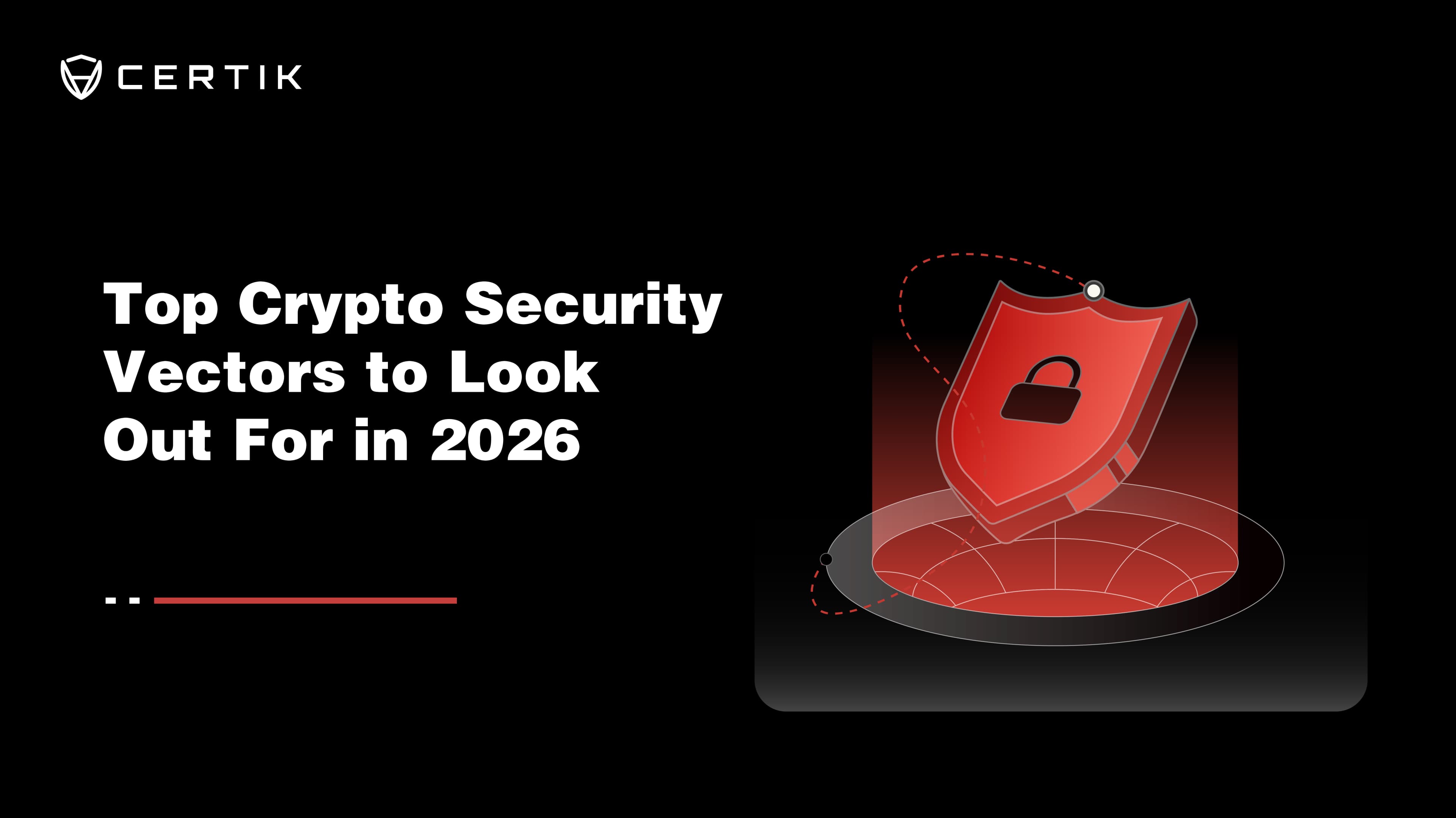
2026 represents a critical juncture in the security of digital assets. As the crypto ecosystem continues to institutionalize, threats are evolving, driven by the industrialization of artificial intelligence and the emergence of new vulnerabilities.
Real-Time Deepfakes
Given that real-time video and voice synthesis tools have now entered the mainstream, social engineering has reached a dangerous milestone. In 2026, a simple facial verification or a video call is no longer sufficient to guarantee the identity of a counterparty. Attackers are now deploying AI models capable of perfectly mimicking the voices and appearances of exchange executives or personal associates to solicit fund transfers or gain privileged access. This threat necessitates a shift from visual to cryptographic trust, where every sensitive action must be validated through multi-signature protocols or hardware-based proof of presence.

The Rise of Phishing and Qrishing
Traditional phishing has evolved into a multi-vector assault. QR code phishing, or "qrishing," has emerged as particularly effective against mobile-first crypto users. Attackers distribute malicious QR codes through social media, fake customer support channels, and even physical locations to redirect victims to fraudulent wallet draining sites.

Modern phishing campaigns now feature AI-generated landing pages that dynamically adapt to the victim's wallet type, creating perfectly tailored approval requests that bypass traditional red flags. These sites can even simulate legitimate transaction interfaces while injecting malicious contract interactions.
Defense requires a layered approach: hardware wallet usage for significant holdings, careful verification of contract addresses before approving transactions, and treating all unsolicited QR codes with suspicion.
The Quantum Harvest
2026 is seeing the rise of a new strategy: “harvest now, decrypt later.” Attackers are intercepting and storing massive volumes of encrypted data and private communications with the intent of unlocking them in the coming years. For long-term asset holders, transitioning toward post-quantum cryptography standards is no longer a theoretical option but a strategic necessity to ensure the long-term viability of their digital wealth.
Supply Chain Compromises
The crypto infrastructure has become increasingly complex, creating new attack surfaces through third-party dependencies. In 2026, attackers are targeting the software supply chain with unprecedented precision. Malicious code injected into popular npm packages, wallet libraries, or development frameworks can compromise thousands of projects simultaneously.
Recent incidents have demonstrated that even widely-audited protocols can fall victim when a dependency several layers deep becomes compromised. This is notably what occurred during the Bybit hack in February 2025. The industry must adopt strict dependency verification practices, including cryptographic signing of all packages and continuous monitoring for unexpected code changes in the dependency tree.

Cross-Chain Bridge Vulnerabilities
As interoperability becomes central to DeFi's value proposition, cross-chain bridges have emerged as prime targets. The complexity of maintaining state across multiple blockchains creates attack surfaces that single-chain protocols don't face, as demonstrated in our blog regarding the Gyroscope bridge hack.
The fundamental challenge lies in the trust assumptions bridges must make. Whether relying on multi-signature schemes, optimistic verification, or light client proofs, each approach carries distinct security trade-offs. Users should critically evaluate the security model of any bridge before transferring significant value, favoring those with extensive formal verification and established track records.