Products & Technology
Featured Ecosystems


Company
What is a Privacy Coin?


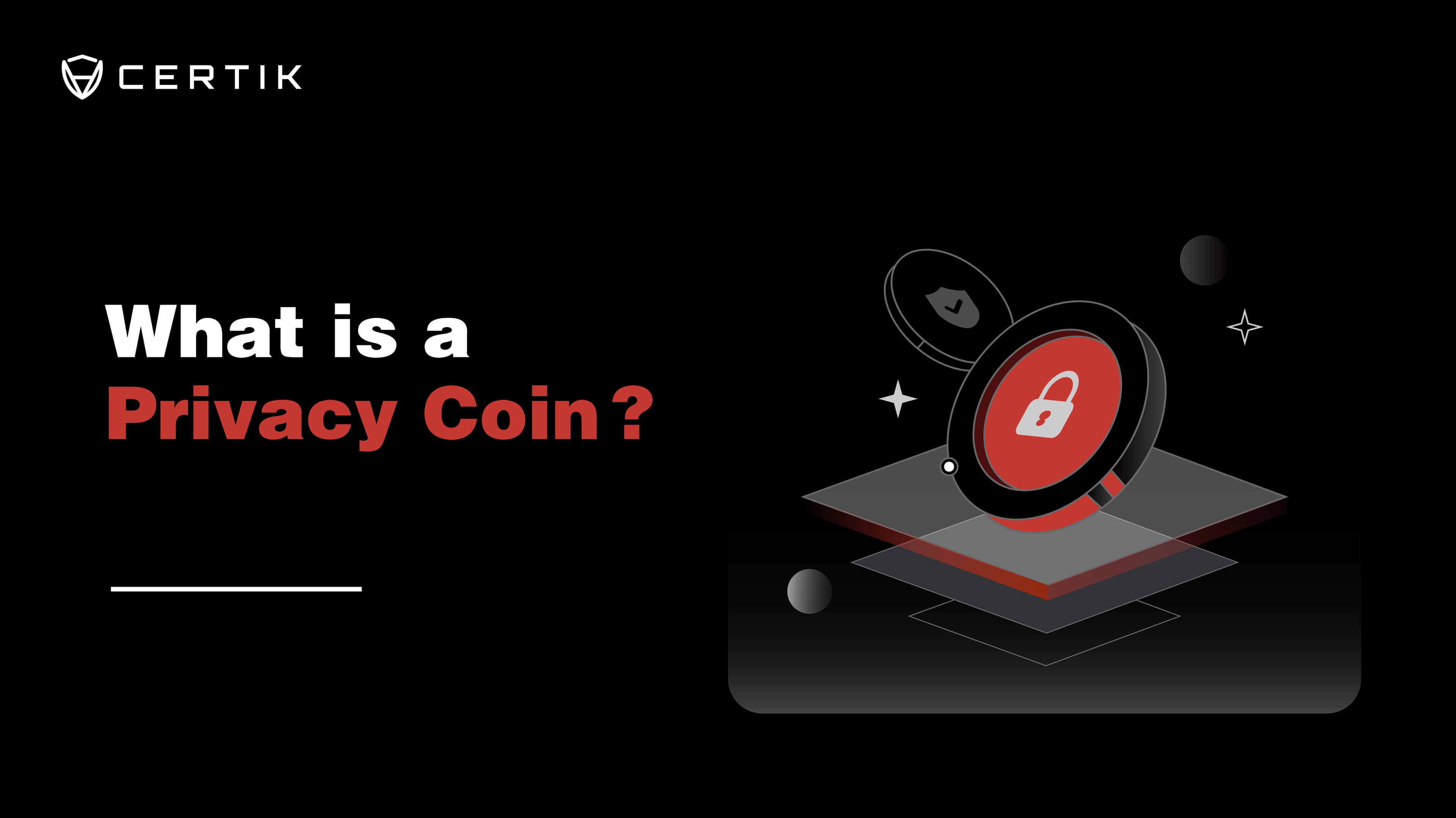
Privacy coins are cryptocurrencies engineered to enhance user anonymity by obscuring transaction data (such as sender identities, transaction amounts transferred, transaction history, etc.). Unlike pseudonymous digital currencies such as Bitcoin (BTC), privacy coins employ advanced privacy-enhancing cryptographic methods to mimic the untraceability of physical cash in the Web3 ecosystem.

Popular Privacy Coins
There are many privacy coins, but the most well-known are Monero (XMR), Zcash (ZEC), and Dash (DASH) in the decentralized digital assets space.
Monero offers a default level of privacy through cryptographic techniques like one-time addresses, making it the most anonymous by default. Zcash provides optional privacy shielded transactions via zk-SNARKs, allowing users to choose between transparency and privacy features. Finally, Dash features optional PrivateSend.
How Privacy Coins Work
Privacy coins employ multiple-layered cryptography techniques for comprehensive obfuscation in blockchain technology.
Ring signatures, introduced in CryptoNote and used in Monero, allow a signer to anonymize their input among a set of decoy public keys on the blockchain, proving ownership without revealing the true spender. Consequently, the probability of identification drops significantly.

One-time addresses, although known as Stealth addresses, create a unique, one-time destination for each payment. The sender generates it from the receiver's public key, and only the receiver can access it using a private shared secret, breaking any links to the main wallet.
Ring Confidential Transactions (RingCT) conceal amounts with "blinding" math: commitments hide values while proofs ensure inputs match outputs exactly, without revealing numbers.
Digital currencies like Zcash use zero-knowledge proofs (zk-SNARKs) for shielded transactions, allowing real-time verification of correctness while keeping all details private. It’s like proving that a puzzle is solved without showing the solution.
Use Cases and Benefits
Privacy coins offer several legitimate benefits for crypto users. They protect sensitive financial data for individuals, businesses, and non-profits operating in high-risk regions. They can prevent tracking of salary payments, donations, or commercial transactions, giving users financial freedom and more control over their privacy. They are also a hedge against surveillance in digital economies where cryptocurrency transactions are often monitored or analyzed at scale beyond illicit activities concerns.
Regulatory Implications and Risks
The anonymity features of privacy coins have drawn scrutiny from regulators and law enforcement due to potential misuse in money laundering, tax evasion, ransomware payments, and other illegal activities. The Lazarus Group notably used Monero to launder funds during the Bybit hack. Additionally, on April 28, 2025, $330 million in Bitcoin was stolen from a U.S. investor and immediately swapped for XMR, causing a price spike.

Some exchanges have delisted or restricted privacy coins, and certain jurisdictions like the EU or South Korea require stricter reporting and compliance measures. For example, Binance announced the delisting of Monero on February 20, 2024, and Coinbase has never listed it for trading due to regulatory concerns around the future of privacy coins.
While privacy coins are technically neutral tools, their usage carries regulatory and operational risks for both users and platforms.