Products & Technology
Featured Ecosystems


Company
What are Stablecoins?


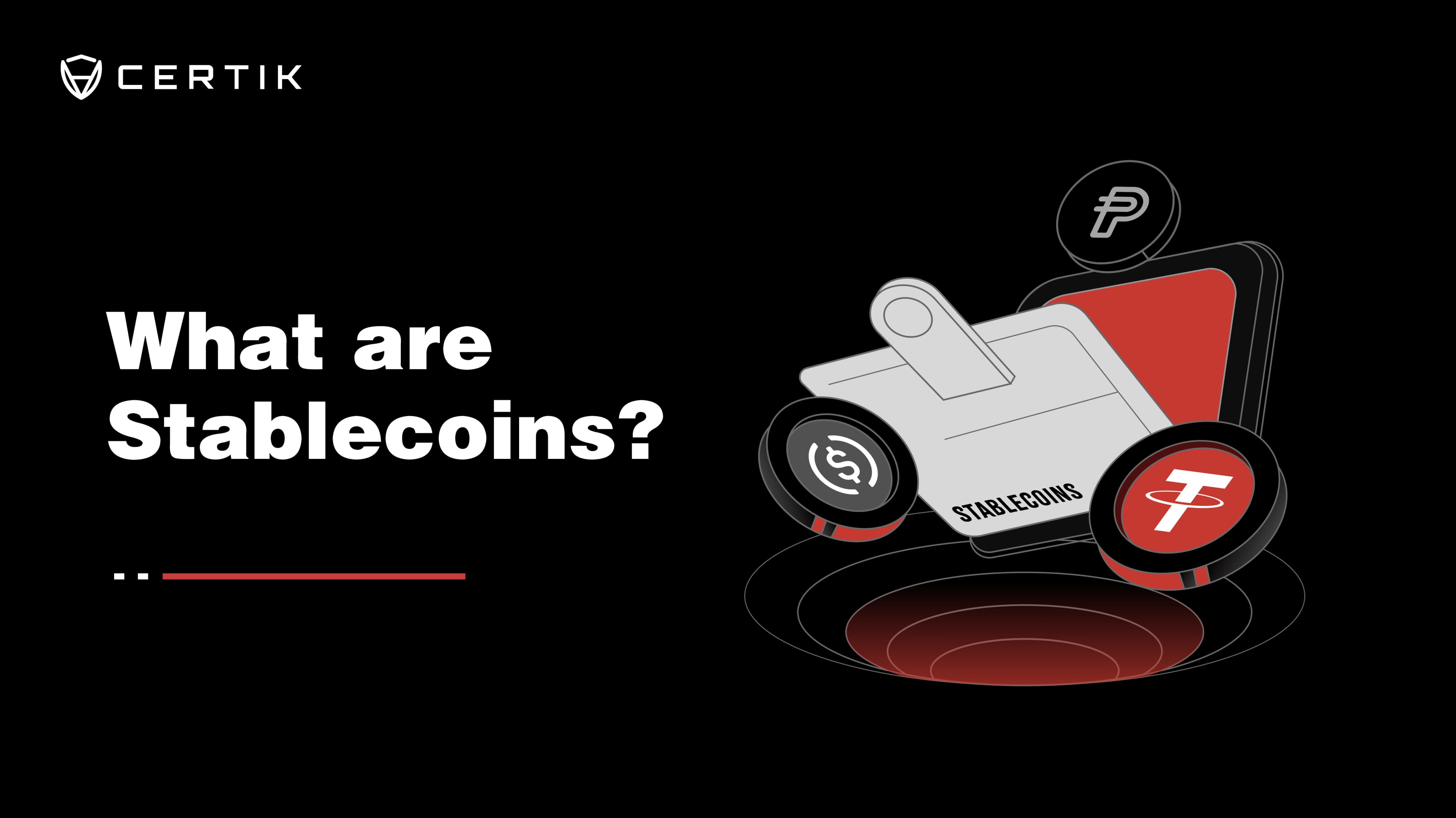
Stablecoins have become a foundational component of the crypto ecosystem, powering everything from trading and payments to decentralized finance (DeFi) and cross-border settlements. Designed to offer price stability in an otherwise volatile market, stablecoins aim to combine the efficiency of blockchain technology with the familiarity of traditional currencies, like the U.S. dollar.
Below, we will break down what stablecoins are, how they work, the different types in circulation, their benefits and risks, and what users should consider before using them.
What are Stablecoins?
Stablecoins are digital assets issued on blockchains that are specifically engineered to maintain a stable value. Unlike cryptocurrencies such as Bitcoin or Ether, whose prices can fluctuate significantly, most stablecoins are designed to track a fixed reference price (such as $1 USD).
This stability makes stablecoins useful as:
- A medium of exchange for on-chain transactions.
- A store of value during periods of crypto market volatility.
- A bridge between traditional financial systems and blockchain-based markets.
By offering predictable pricing with blockchain-native settlement, stablecoins serve as an essential link between fiat currency and decentralized networks.
How Do Stablecoins Work?
Stablecoins maintain their peg through a combination of reserve management, market incentives, and smart contract logic, depending on their design.
When a user acquires a stablecoin, it is typically minted by an issuer or protocol. In centralized models, new tokens are issued when users deposit fiat currency, and tokens are burned when users redeem for fiat. In decentralized systems, smart contracts manage issuance based on collateral deposits or algorithmic supply adjustments.
Transactions themselves function like other blockchain transfers: users send stablecoins between wallets, exchanges, or smart contracts, with settlement occurring on-chain and finalizing quickly.
Common Types of Stablecoins
Stablecoins fall into four primary categories, each with different mechanisms and risk profiles.
Fiat-Backed Stablecoins
These are issued by centralized entities that hold reserves, such as cash, U.S. Treasuries, or bank deposits to match the tokens in circulation. Stability is maintained through redemption, as users can exchange tokens for fiat at par value. Primary risks include counterparty exposure, reserve quality, and transparency of disclosures.
Crypto-Backed Stablecoins
These stablecoins are overcollateralized with cryptocurrencies, such as ETH. Smart contracts enforce collateral ratios and automatically liquidate positions if collateral values fall too low. Primary risks include collateral volatility, oracle failures, and smart contract vulnerabilities.
Commodity-Backed Stablecoins
These tokens are pegged to physical assets like gold, with issuers claiming custody of the underlying commodity. Stability depends on asset custody and regular attestations. Primary risks include custody assurances, audit transparency, and redemption logistics.
Algorithmic Stablecoins
Algorithmic models rely on market incentives and supply adjustments rather than full reserves. While capital-efficient, these systems are highly sensitive to market confidence and can fail under stress, as seen in past de-pegging events like the Terra/Luna incident. Primary risks include reflexive runs, loss of confidence, and rapid de-pegging.
| Type | Backing | How Stability is Maintained | Examples | Primary Risks |
|---|---|---|---|---|
| Fiat-backed | Cash, US Treasuries, bank deposits | Redemption for fiat; issuer manages reserves | USDC, USDT | Counterparty, reserve quality, disclosure |
| Crypto-backed | Overcollateralized crypto | Smart-contract rules, liquidations | DAI, LUSD | Collateral volatility, oracle risk |
| Commodity-backed | Gold or similar | Custody + attestations | PAXG, XAUT | Custody, audit transparency |
| Algorithmic | Incentives/algorithms | Supply expansion/contraction | TerraUSD | De-pegging, reflexive runs |
Key Functions and Benefits of Stablecoins
- Stable value: Stablecoins are designed to reduce volatility relative to traditional cryptocurrencies, though stability is not guaranteed under all market conditions.
- Frictionless transfers: They enable fast, low-cost transfers across wallets and exchanges without relying on traditional banking intermediaries.
- Cross-border payments and remittances: Stablecoins allow near real-time global transfers with transparent feeds, making them attractive for international payments.
- Liquidity in DeFi: They serve as core trading pairs, collateral assets, and accounting units across decentralized finance applications.
- On-ramps to Web3: Stablecoins provide a familiar fiat-denominated entry point for users interacting with blockchain-based services.
Risks of Stablecoins
Despite their utility, stablecoins carry meaningful risks that users and institutions should evaluate:
- De-pegging: Market stress, reserve concerns, or rapid redemptions can cause prices to deviate from the intended peg.
- Liquidity: Issuers and protocols must be able to meet redemption demands during periods of elevated withdrawals.
- Transparency and audits: The quality, frequency, and scope of reserve attestations vary widely between issuers.
- Counterparty exposure: Centralized stablecoins depend on banks, custodians, and financial intermediaries.
- Smart contract vulnerabilities: Decentralized systems can be impacted by bugs or design flaws in on-chain logic.
- Regulatory and AML considerations: Compliance requirements differ by jurisdictions and can affect issuance, usage, and redemption.
Common Use Cases of Stablecoins
Here are some common use cases of stablecoins:
- Trading and hedging: Traders use stablecoins to exit more volatile positions while remaining on-chain
- Payments and payroll: Businesses and financial services use stablecoins for faster, lower-cost settlements.
- DeFi Infrastructure: Stablecoins underpin lending markets, liquidity pools, and yield strategies.
- Remittances: They reduce intermediaries and settlement delays while preserving value in a familiar unit like USD.
Practical Tips Before You Use Stablecoins
Before using any stablecoin, understand who issues it and how it is backed. Review public disclosures to assess reserve composition, attestation frequency, and whether independent third parties verify those reserves. Users should also confirm they are interacting with the correct blockchain and official smart contract, as many stablecoins exist across multiple networks, and unofficial contracts can lead to irreversible losses. Liquidity is another important factor, given that stablecoins with deep markets across multiple exchanges tend to be more resilient during periods of volatility or heavy redemptions.
Security and risk management should not be overlooked. Choose wallets with strong security practices, back up private keys securely, and consider hardware wallets for larger balances. Avoid concentrating exposure in a single issuer or mechanism, as different stablecoin models carry different risks. Monitoring broader indicators such as market capitalization changes, on-chain flows, and redemption activity can help identify early signs of stress and allow users to respond proactively.
How CertiK Helps
CertiK helps secure the smart contracts and on-chain components that underpin stablecoin ecosystems, from collateral management to mint/burn logic and oracle design. We provide smart contract audits, penetration testing, and ongoing monitoring to reduce the risk of code-level failures, liquidity shocks from bugs, and governance misconfigurations. Our KYC and compliance-focused services also support issuance programs and integrations with financial services.